
Zombies Arent Real Workshop Maps: Custom Cities
How Steam Workshop and custom maps work in Zombies Arent Real: publishing a map, playing other cities, and using public geographic data.
Zombies Arent Real ships with Steam Workshop support on day one of Early Access. The developer's own Early Access notes put it plainly: you can play missions in the cities they built, and you can upload and play custom maps.
The second half of that sentence is the interesting one, because of how the maps are made.
Maps come from real geography
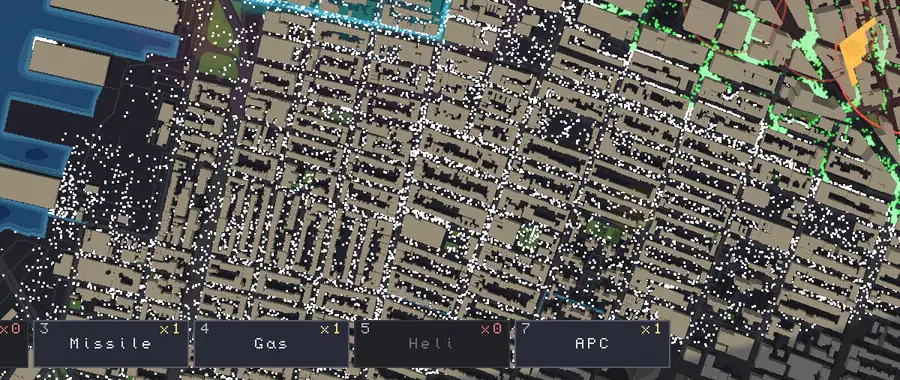
The store description says the game uses real city maps built on public geographic data — OpenStreetMap, Overture and TomTom are named as sources — and the Early Access notes add the detail that matters: the game can pull map data from many zipcodes from across the world.
That has a practical consequence. A custom map is not a hand-painted arena. It is a real place, with real street widths, real bridges, real waterfronts and real building footprints. The tactical problems come from the geography, which is why a Boston harbor map and a landlocked grid play nothing alike.
For a guide site, that is the whole reason to care about Workshop: the map pool is effectively unlimited, so the skill that transfers is reading terrain, not memorising a layout.
Playing other people's maps
Subscribing to a Workshop map is the standard Steam flow:
- Open the game's Workshop hub from the Steam client or the store page.
- Subscribe to a map.
- Launch the game; subscribed maps appear in the mission selection.
The Workshop listing for the game will be thin at launch because the game is two days old. Expect the pool to fill as players test the level editor and the geography importer.
What to look for in a custom map
Not every Workshop map is worth your evening. The ones that play well tend to share features:
A single strong chokepoint. Bridges, canal crossings and highway interchanges create the funnel that makes cheap units viable.
Dense civilian blocks near an edge. The evacuation game needs a crowd close to an exit; maps with the population buried in the middle are punishing.
Vertical variety. The height camera exists for a reason, and maps with elevation changes give snipers and mortars different value than flat grids.
A waterfront or a hard boundary. Water is a free wall, and free walls are what let a small budget hold a long line.
Maps that are mostly uniform grid have the opposite problem: no funnel, no free wall, and every street is equally dangerous.
Using the real world as a design tool
The zipcode import is the feature that turns the map list into a research project. If you can pull in a city you know, you can test layouts against streets you can picture, which is a faster way to learn the game's geometry rules than repeating the built-in missions.
It also makes co-op easier. Two players who both know the real place can agree on a plan without a scouting phase.
The height camera is your map reader
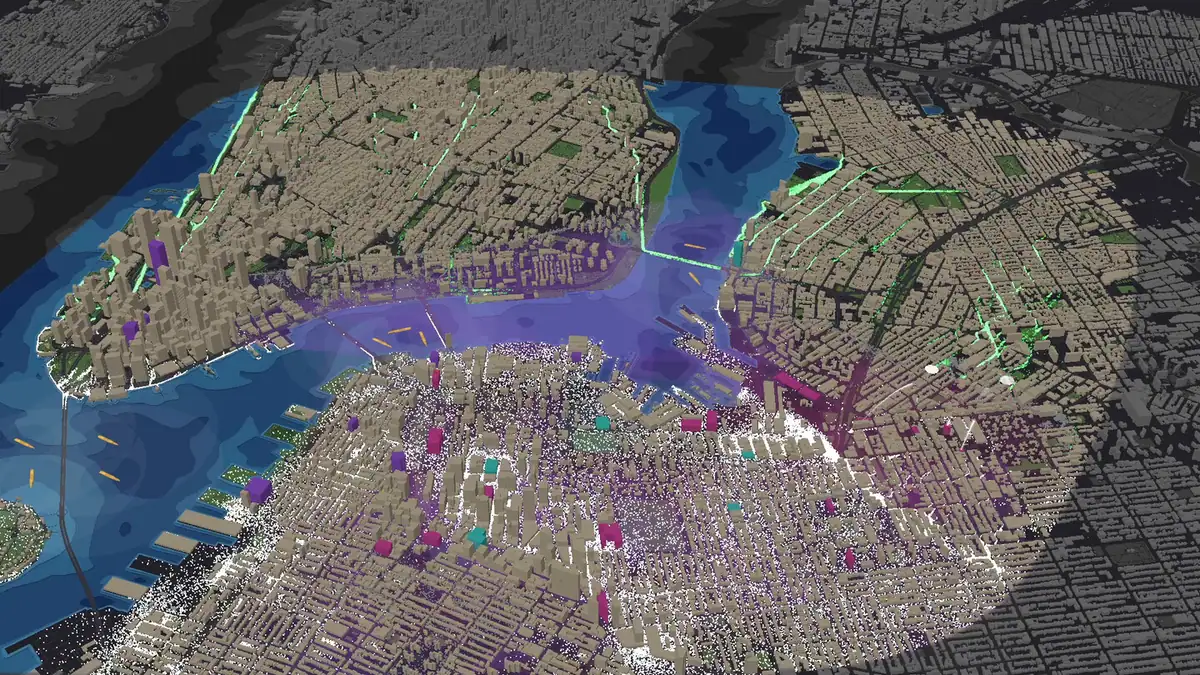
Press H to open the height view. It turns the flat city into blocks and makes three things obvious that the top-down view hides:
- which streets are wide enough to carry a crowd
- where the ground rises and sightlines break
- how far a bridge really is from the civilian district
Reading a new map in height view before deploying is the habit that makes Workshop maps playable on the first attempt.
A short checklist before you deploy on a new map
- Find the water. It is the cheapest wall on any map.
- Find the crossings. Every bridge is a chokepoint you did not have to build.
- Find the density. Where the blocks are tightest is where civilians are packed.
- Find the exit. One edge, away from the initial purple.
- Check the height view. Then place the corridor.
Five minutes of reading beats ten minutes of repairing.
Publishing your own map
The level editor is listed as included with the game, and the Workshop flow is the standard Steam one: build, test, publish, and iterate on feedback.
Since maps are derived from real geography, the fastest route to a good first map is to pick a city with a strong natural chokepoint — a river, a harbour, a peninsula — and let the terrain do the design work.
If a custom map turns out to have one strong bridge, the chokepoint guide → is the page that turns it into a plan.
Maps are made by players, not by the developer, and quality varies. Treat a subscription as a test run rather than a commitment.
Official source: Steam store page ↗ · Steam Workshop ↗ · Steam Community hub ↗
FAQ
Does Zombies Arent Real support Steam Workshop?
Yes. Workshop support is present at Early Access launch, and the developer's notes describe uploading and playing custom maps.
Where do the map layouts come from?
Real cities, built from public geographic data. The developer names OpenStreetMap, Overture and TomTom as sources and says maps can be pulled from zipcodes worldwide.
Can I make a map of my own city?
If the zipcode import covers it, yes — that is the feature the Early Access notes describe.
Are Workshop maps available in co-op?
Yes, both players can play a subscribed map together.
Is there a level editor?
The store page lists an included level editor alongside Workshop support.