
Zombies Arent Real Chokepoints: Hold the Bridges
Reading Zombies Arent Real city maps for chokepoints: bridges, rivers, waterfronts and the wall-and-gate funnel that turns a street into a kill box.
Zombies Arent Real builds its maps from real cities, which means it inherits real geography: rivers, bridges, waterfronts, rail cuttings, wide avenues and narrow side streets. That geography is free defense, and most players spend their budget buying defense instead of using it.
A chokepoint is anywhere the map already forces the horde into a line. Find it before you place a single unit and the same budget buys twice the result.
Why real city maps matter
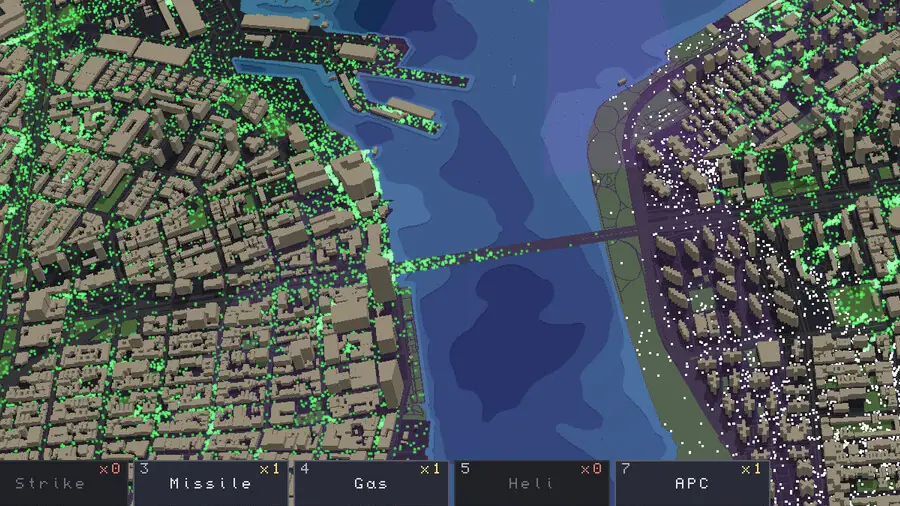
The store page is specific about this: the maps are built from real-world map data, with the city geometry that comes with it. Streets follow the terrain, bridges are where the water allows them, and the road network has the same asymmetry a real city has.
For a defense game that is a gift. A river is a wall you did not pay for. A bridge is a gate you do not need to place. A dense residential grid is a maze of doorways that infantry can hold for pennies.
The skill is not building chokepoints; it is noticing the ones the map shipped with.
The four kinds of chokepoint
Bridges and crossings. The strongest type. Water on both sides, one route across, and a queue behind it. A turret at $90 and a handful of spikes at a dollar will make a bridge cost more than it is worth to the horde.
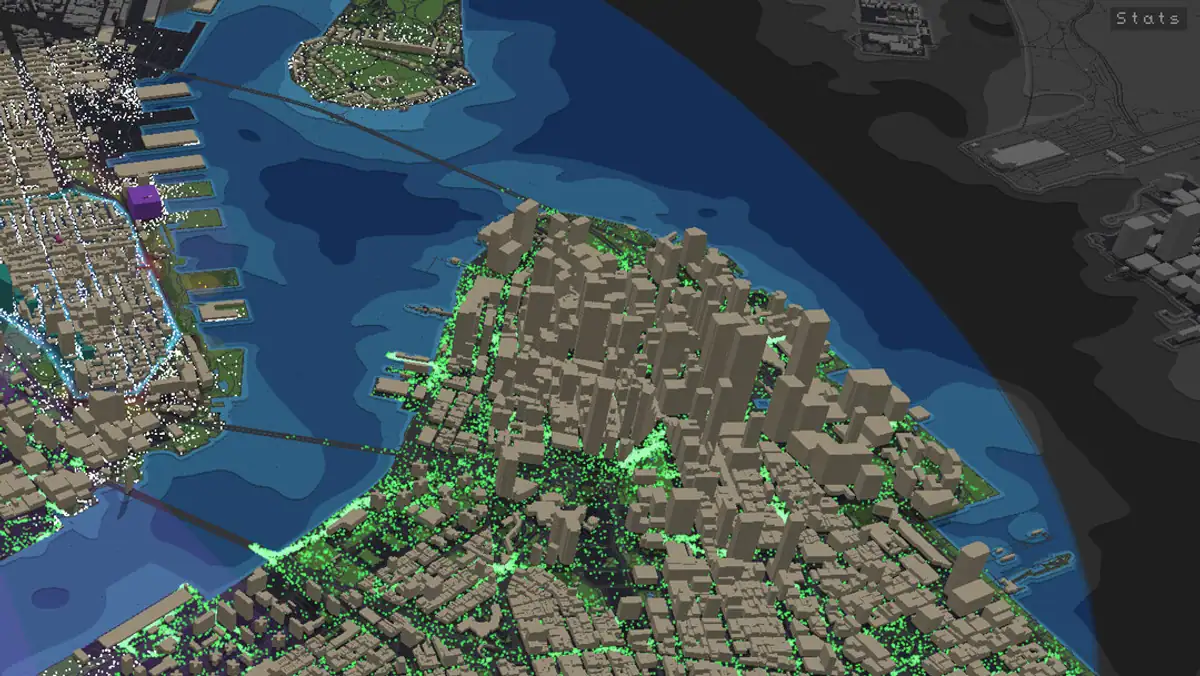
Waterfronts and peninsulas. Any landmass with water on three sides is a natural fortification: the horde has to arrive from one direction, and you get to place everything else inside the perimeter.
Street narrowings. Where a wide avenue becomes a two-lane street, the flow compresses on its own. This is where sniper sightlines turn into kill counts.
Dense building grids. Not a chokepoint in the geometric sense, but functionally one: garrisons in the right doorways stop a push that would walk straight down an avenue otherwise.
Turning a bridge into a kill box
The sequence is cheap and repeatable:
- Spike the far side. A line of spikes at $1.00 each slows the crossing into a queue.
- Put a turret on the near side with a clean line. Ninety dollars, aimed along the bridge rather than across it.
- Garrison the buildings at the bridgehead. They stop anything that gets through the turret's arc.
- Wall the alternative crossing. If there is a second bridge, this is what the wall is for.
- Mine the water's edge. Mines cost $200 and they cover the one flank your turret cannot.
Total cost: under $400, and it holds longer than a $500 layout in the open because the map is doing half the work.
Do not fight the map
Two habits that waste chokepoints:
Placing at the infection front. The infection is a source, not a border. Units placed at the purple blocks face the horde in the open, where the map gives you nothing.
Spreading along the whole street. A line of five garrison pairs along an avenue is five weak points. Three pairs at the crossing is one strong point.
The general rule: concentrate at the narrowest place you can defend, and let the map's geometry filter everything that arrives.
Chokepoints and civilians
A chokepoint is not automatically good for civilians. If the corridor runs through the bridge you have just spiked, you have built a trap.
Two fixes:
- Gate the civilian route.
Gopens a controlled passage in a wall so the evacuation line does not cross the spike field. - Draw the corridor around, not through. At $0.40 per length, routing civilians around a kill box costs pennies compared to losing the route entirely.
That is why the build tools sit next to the civilian tools on the bar: the same geometry serves both, and the failure mode is always a corridor that shares a street with the funnels.
Reading a new map in ninety seconds
Before spending, do this with the height view open:
- Find the water. Every coastline is a wall.
- Find the crossings. Every bridge is a gate.
- Find the wide roads that lead from the infection toward the civilians. Those are the horde's highways.
- Put a chokepoint on each highway, at the narrowest point between the infection and the people.
That is the whole map read. Everything after it is buying the units that fit the funnels you found.
When there is no chokepoint
Open maps exist, and on them the geometry has to be manufactured. That is what walls and gates are for: wall a long route, gate a short one, and the horde takes the short one because pathing prefers it. Add a mortar for the open ground and a turret for the gate, and a flat map becomes a funnel with a price tag.
Even then, buy the cheap layer first. Fifty spikes and two wall segments cost less than a sniper and they decide where the fight happens, which is worth more than any individual kill.
If the funnel needs a second layer of holding behind it, the defense setup guide → shows where the next purchase goes.
Before you spend a dollar, open the height view and trace two routes: the horde's shortest path to the civilians, and the civilians' shortest path to the edge. Every purchase after that should sit on one of those two lines.
Official source: Steam store page ↗ · Steam Community hub ↗ · SteamDB ↗
FAQ
What is the best chokepoint in Zombies Arent Real?
A bridge. Water does the work on both sides, the crossing forces a single file, and a turret aimed along the span plus a line of spikes costs under $150.
Can I create a chokepoint on an open map?
Yes, with walls and gates. Wall the long route and gate the short one, and the horde's pathing will take the funnel you built.
Should I defend the infection blocks?
No. The infection is where zombies come from, not a border worth holding. Defend the routes between the infection and the civilians instead.
Do chokepoints hurt civilians?
They can, if a corridor runs through a spike field or a kill box. Gate the civilian route or draw the corridor around the funnel.
Are chokepoints still useful in co-op?
Yes, and more so: two players can cover two funnels instead of one, which turns a wide map into a set of defensible crossings.