
Zombies Arent Real Money Guide: Budget First
How the Zombies Arent Real budget works: the $9,410 launch example, scaling garrison prices, refunds and how to split spending between layers.
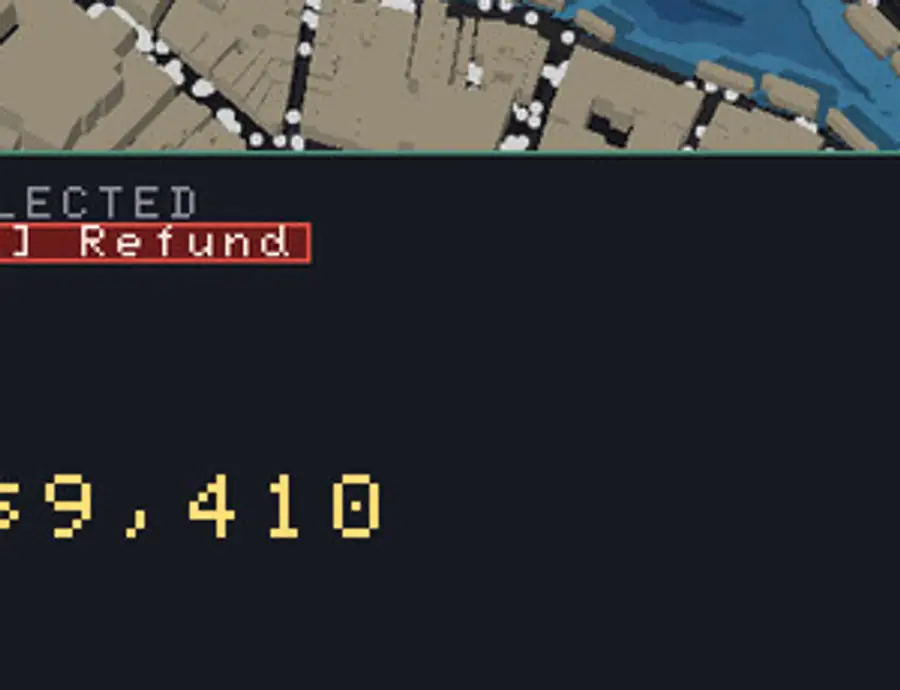
The budget is the only resource in Zombies Arent Real that you cannot get more of. There is no income during a mission, no kill reward, no loot drop. You start with a number, you spend it during planning, and you refund what you got wrong.
That makes the game an allocation problem rather than an economy, and it means the money guide is really a decision-order guide.
What the numbers look like
In the launch build's deployment screen the wallet read $9,410, with the deploy bar priced as follows:
| Item | Price | Share of a $9,410 budget |
|---|---|---|
| Spikes | $1.00 | 0.01% |
| Garrison | $15+ (scales) | 0.16% for the first |
| Corridor | $0.40 per length | negligible per segment |
| Hold | $0.80 per radius | negligible |
| Sniper | $35 | 0.37% |
| Safe Zone | $1.00 per cell | negligible |
| Turret | $90 | 0.96% |
| Mine Field | $200 | 2.1% |
| Mortar | $270 | 2.9% |
| C4 | $500 | 5.3% |
Read that column again. The most expensive single purchase in the game is about five percent of the budget. You are not choosing between a mortar and a house; you are choosing how to distribute a large pool across a lot of small decisions.
That has a consequence that surprises new players: the correct early spend is wide, not tall. Ten cheap placements beat one expensive one because they cover more of the map, and the map is what kills you.
The 60/30/10 split
A split that works on the launch mission and scales to the others:
- 60% on the damage layer. Snipers, turrets, the occasional mortar. This is where kills come from.
- 30% on the civilian layer. Corridors, hold orders, safe zone cells. This is where the win comes from.
- 10% held in reserve. Not spent at all during planning.
The reserve exists because the map always produces one event you did not plan for: a breach, a corridor closure, a second front. A banked tenth of the budget is two turrets or a dozen garrisons placed exactly when they are needed. A fully spent budget is a layout that cannot react.
If holding 10% sounds wasteful, watch what happens in the last third of a mission when a wall falls. The reserve is the difference between repairing and losing.
Why the garrison price matters
The garrison is the only item on the bar with a + in its price. Each purchase raises the cost of the next, which means the cheap tier has a deadline built into it.
The practical reading: garrisons are a planning-phase purchase, and the earlier they go down the better. A player who buys six garrisons in the first pass pays far less than a player who buys them one at a time as emergencies arise.
Everything else on the bar has held a flat price in the launch build, so a sniper bought at minute one costs the same as a sniper bought at minute thirty. There is no reason to delay those; there is every reason to delay the garrison if you are not sure where it goes.
Refunds are part of the plan
X refunds the selected unit. REFUND ALL clears the entire layout during planning. Both return the full price, and both are instant.
That makes placement a reversible decision, which changes how you should play. Do not agonise over a turret position: place it, watch the first thirty seconds, refund it if the horde is not coming that way, and spend the $90 where the fight actually is.
The exception is the garrison. Because its price scales, refunding one does not necessarily reset the price of the next, so churning garrisons can quietly cost money. Place them once, deliberately, on the corridor.
Where money does not help
Three spending patterns that lose runs:
Buying the expensive tier first. A mortar at $270 with no units to cover its minimum range is a hole in the budget.
Spending on ground you will lose. Every dollar placed in a district you have already written off is a dollar that never fights.
Skipping the cheap layer. Spikes at a dollar and safe-zone cells at a dollar are the highest-return purchases on the bar, and they are the ones players skip because they do not look like damage.
Budget for the mission you have
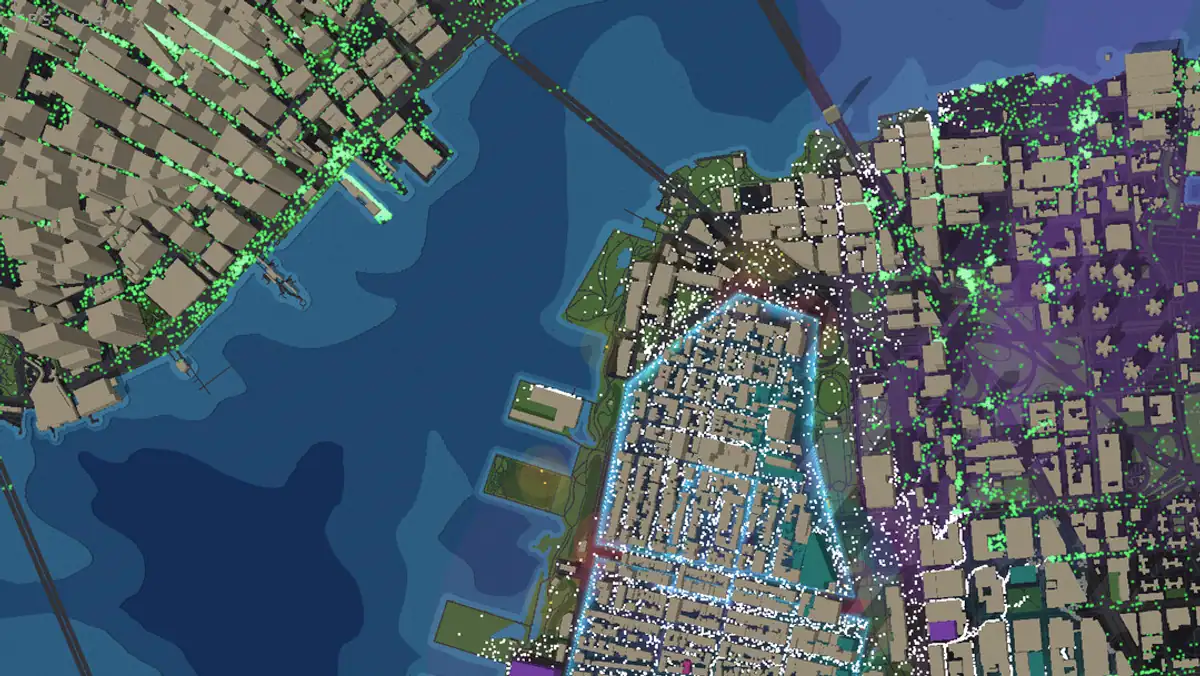
The launch mission's wallet is generous, and later missions raise the pressure rather than the budget. If a mission starts feeling tight, the fix is not a better unit; it is a smaller footprint: fewer buildings held, one corridor instead of two, and a reserve that can actually respond.
The upgrades guide → covers the only other money sink in the game, the $150 level-up, and the tier list → ranks what your money buys per dollar.
The mortar costs eight sniper rifles and out-killed nothing in the launch capture. Check the per-unit kill column before assuming the expensive item is the strong item.
Official source: Steam store page ↗ · Steam discussions ↗ · SteamDB ↗
FAQ
How much money do you get in Zombies Arent Real?
The launch build's deployment screen showed a budget of $9,410 for the starting mission. The wallet scales per mission rather than per kill, since there is no in-mission income.
Is there any way to earn money during a mission?
No. Spending power is the starting budget plus refunds, which is why the planning phase carries most of the economic decision.
Do refunds return the full price?
Yes, the selected-unit refund and REFUND ALL both return what you paid during planning.
What should I buy first?
Six cheap garrisons along the civilian route, a line of spikes on the expected approach, and one sniper on the best roof. That is roughly $200 and it covers all three layers.
Is the $150 level-up worth it?
Only on a unit that is already producing kills. Upgrading a mortar with a zero kill count buys a faster way to miss.