
Zombies Arent Real Air Support: Every Call
Paratroopers, Strike, Missile, Gas, Heli and APC in Zombies Arent Real: what each call does, how the counts work and what the collateral costs.
The in-mission bar is not the deploy bar. It holds six support calls — Paratroopers, Strike, Missile, Gas, Heli and APC — each with a limited count (x20, x1, x0), and each doing something no purchased unit can do.
Support is also the only category the store page warns you about in the same sentence as it advertises it. The developer's own description of gatling helicopters and bombing runs comes with a note about civilian casualties, which is a design decision rather than a bug.
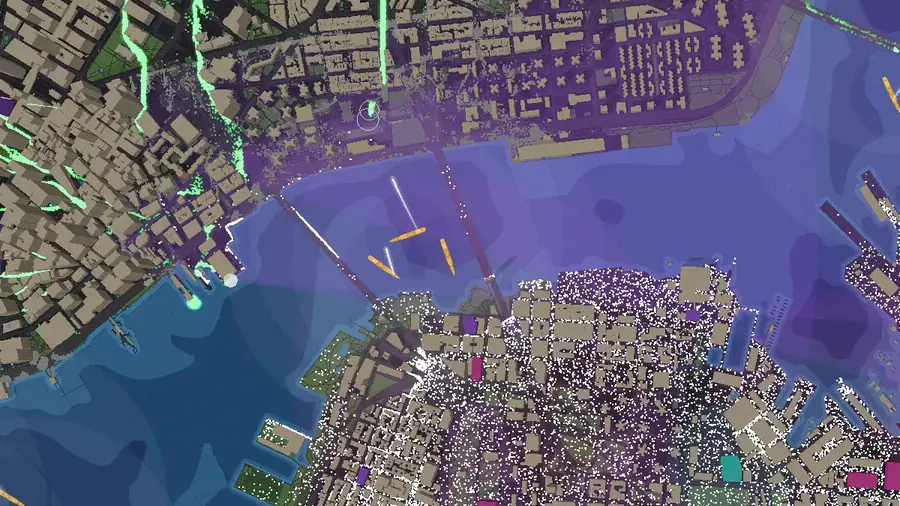
Reading the bar
Six slots, six calls, and a number next to each. In the launch capture the bar read:
| Slot | Call | Count shown | Category |
|---|---|---|---|
| 1 | Paratroopers | x20 | Infantry insertion |
| 2 | Strike | x0 | Precision airstrike |
| 3 | Missile | x1 | Heavy impact |
| 4 | Gas | x1 | Persistent area effect |
| 5 | Heli | x0 | Gatling helicopter |
| 7 | APC | x1 | Armored transport |
The counts are per mission and they do not refill. A support call is ammunition: once the slot reads x0, that answer is gone for the rest of the run. That single rule is why support should be spent on the moments that decide the mission rather than on the first horde that annoys you.
Paratroopers: the count hides the cost
Twenty paratroopers is the largest infantry insertion available in one press, and it arrives where you point it rather than where the map lets you build. That makes it the correct answer to a corridor that is about to close: drop bodies into the gap, keep the route alive, and do not spend a dime of the deploy budget.
The trap is that paratroopers are still infantry. They hold ground and die slowly; they do not clear a district. Dropping them into the middle of a horde is a way to convert a support call into twenty corpses.
Strike and Missile: precision versus weight
Strike is the cheap precision option. It removes a specific problem: the group that just broke a wall, the clump forming at a gate, the building that is about to fall.
Missile is the heavier version of the same idea. It does more of what Strike does and it costs more of your limited stock, so the rule is straightforward: use Strike when the problem is local, and save Missile for the moment when two pushes arrive at once.
Both are explosive, which means both can kill civilians. The blast does not check uniforms, and a strike on a street with a corridor running through it is a strike on your own evacuation route.
Gas: the slow answer
Gas is the only support call that keeps working after the animation ends. It denies an area for a while, which is useful in exactly the situations where a single explosion is not enough: a wide junction, a bridge approach, the mouth of a gate.
The trade is time. Gas does not save a building that is falling in the next ten seconds; it makes ground expensive for the next minute. Use it to buy the minute, and use something else to solve the emergency.
Heli: the highest damage in the game
In the launch capture, a helicopter logged 492 kills per unit total — more than any other source in the stats overlay, including the airstrike at 344 and the sniper at 84.7.
That is what a gatling run buys: sustained fire over an area, from a platform that the horde cannot reach. Nothing else in the game produces that volume of damage per press.
It is also the least controllable. The helicopter fires where it fires, and civilians in that space die. A run that saves 60% of a district and 5% overall because the helicopter worked the wrong street has still failed the 10% check.
The rule: fly it over ground you have already written off, never over a corridor you still need.
APC: the odd slot
The APC is the armored option in a bar full of aircraft, and the least documented call in the launch build. It reads as a transport and a hard point: something that can move through a dangerous street and survive what a garrison would not.
Treat it as a rescue tool rather than a weapon. When a corridor collapses and civilians are stranded behind the breach, an armored push through the gap is the only support call that both moves and holds.
When to spend support
Four moments are worth a call:
- The corridor is about to close. Paratroopers or APC, whichever the situation allows.
- A push has broken the wall and is inside. Strike, immediately, before it spreads.
- Two threats arrive at once. Missile on the larger, units on the smaller.
- You need a minute, not a kill. Gas.
And four moments that are not:
- Clearing a district you have already decided to abandon.
- Killing a group that a sniper is already shooting.
- Any strike with a corridor inside the blast radius.
- Panic. Support is finite, and a call made in panic is usually the one you needed later.
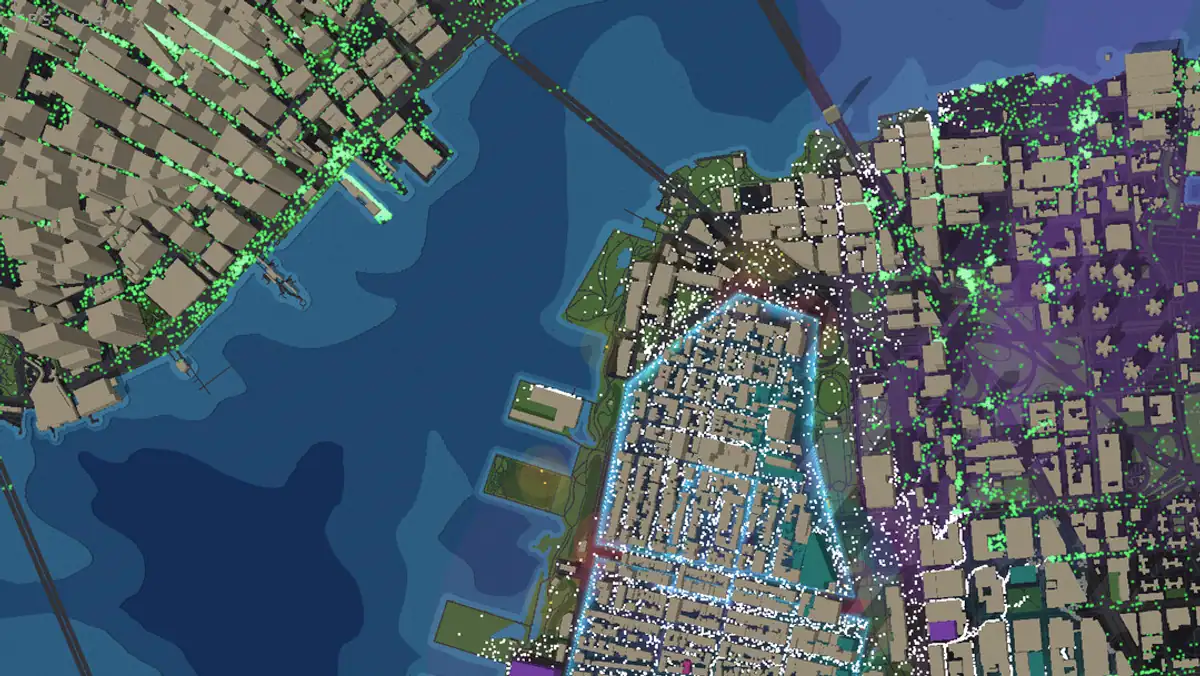
The scoreboard does not care how it looked
Support produces the most spectacular numbers on the overlay and the least reliable outcome, because the two things it does well — killing a lot and killing indiscriminately — are the same thing.
Judge a run by the civilians banner, not by the kill count. If a helicopter run reads 400 kills and the banner reads 6%, the call cost you the mission. That trade is covered in full in the friendly fire guide →.
Keep at least one support slot unspent until the last third of the mission. The moment you actually need support is almost never the moment you first want it.
Official source: Steam store page ↗ · SteamDB ↗ · Steam Community hub ↗
FAQ
How many air support calls do I get?
Each slot carries its own limited count, shown on the bar (x20 for paratroopers and lower numbers for strikes and vehicles). The counts do not refill during a mission.
Does air support kill civilians?
Yes. Airstrikes, missiles, gas and helicopter runs all damage whatever is inside the area, and the store page calls out civilian casualties as part of the design.
What is the best support call?
The helicopter produces the highest observed damage, but the paratroopers are the safest because infantry can hold a position without flattening the block around it.
Can I call support during the planning phase?
Support is called from the in-mission bar, so it becomes available once the mission starts. The deploy bar handles everything you buy before that.
Is air support usable in co-op?
Yes. Two players share the mission, and support calls are the fastest way to cover a flank one player cannot reach in time.