
Zombies Arent Real Spikes and Mines: Cheap Denial
How area denial works in Zombies Arent Real: spikes at $1.00, mine fields at $200 and C4 at $500, plus the wall and gate layout that makes them pay.
Zombies Arent Real sells three things that kill without aiming: spikes at a dollar, mine fields at two hundred, and C4 at five hundred. They sit next to each other on the bar, which makes them look like a progression. They are not. They are three different jobs with wildly different price tags.
This page is about the two that matter for defense, and the one that matters for renovation.
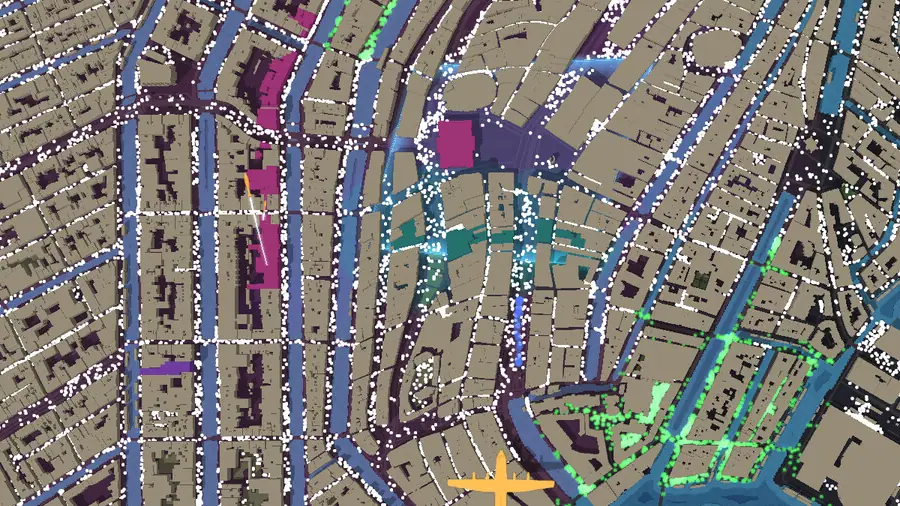
Spikes: the best dollar in the game
Spikes cost $1.00. For that dollar you get movement denial on a spot. They do not kill, they do not have a range, and they do not need line of sight. They simply make the horde spend time somewhere you chose.
Twenty spikes cost less than a sniper. Placed across a street, they turn a fast push into a slow one, and every unit you own gets more shots at the same bodies. That is the entire value proposition of the cheap tier: spikes do not win fights, they extend them, and extensions favor the side with guns.
Where spikes earn their dollar:
- In front of a sniper's sightline. The sniper gets more time on target without you buying a second sniper.
- On the far side of a gate. Anything that breaks through the gate lands on spikes instead of in your corridor.
- Across a bridge approach. The queue behind the bridge is where a horde clumps; spikes keep it clumped.
Where they are wasted: on ground you are about to lose, and in front of units that are not shooting anyway.
Mine fields: denial without watching
Two hundred dollars buys area denial that works when nobody is looking. A mine field does not need a sightline, does not need a garrison, and does not care about the horde's pathing — if something walks over it, it dies.
That makes it the correct tool for two situations:
- A flank you cannot cover. Every map has one. You do not have enough units for it, so you deny it instead.
- A route you have given up. Mines let you trade ground for bodies, which is exactly what a losing district is for.
The costs are honest and easy to forget. Mines are one-use per mine, so a mine field is a one-time answer rather than a wall. They are also blind: they do not check the uniform, so a civilian crossing a mined street is a civilian you killed.
Walls, gates and the trap layout
The build tools matter more than the traps. K places wall, G places a gate, F fortifies, and B marks safe-zone cells at a dollar each.
The combination that works is simple:
- Wall off a street you do not want the horde to use.
- Put a gate where you do want it to go.
- Mine or spike the ground just past the gate.
- Cover the gate with a turret or a sniper.
That is a kill box built from two structural tools and a dollar of spikes. It does not require the mortgage that a mortar does, and it scales with the map rather than against it.
The failure version is a wall with no gate: the horde goes around it, your civilians path into the dead end, and the $0.40-per-length corridor you drew now leads nowhere.
C4 is not a weapon
At $500, C4 is the most expensive thing on the bar, and it does not belong in a combat plan. It is demolition: it removes a structure that is in your way.
Two legitimate uses:
- A building blocking your best sightline. A sniper's roof is only worth what it can see.
- A wall that needs to stop existing. Sometimes your own fortifications become the problem, and a gate is not enough.
If you are buying C4 to kill a horde, you are paying five hundred dollars for a bomb that a $35 sniper would have handled from a roof. The exception is a clump behind a structure with no line of sight, where a mine field at $200 does the same job for less.
What the kill column says
In the launch capture this site is built on, the only trap that appeared in the kill column was the mine field, at 18.8 kills per unit. The sniper sat at 84.7 and the C4 at 112.
That is a fair summary of the tier. Traps are force multipliers, not carries: 18.8 kills for $200 is a worse rate than 84.7 for $35, but the mine field was working on ground no other unit could reach.
Read your own overlay the same way. A unit that kills little but changes where the horde goes has still done its job. That is what the chokepoint guide → is about.
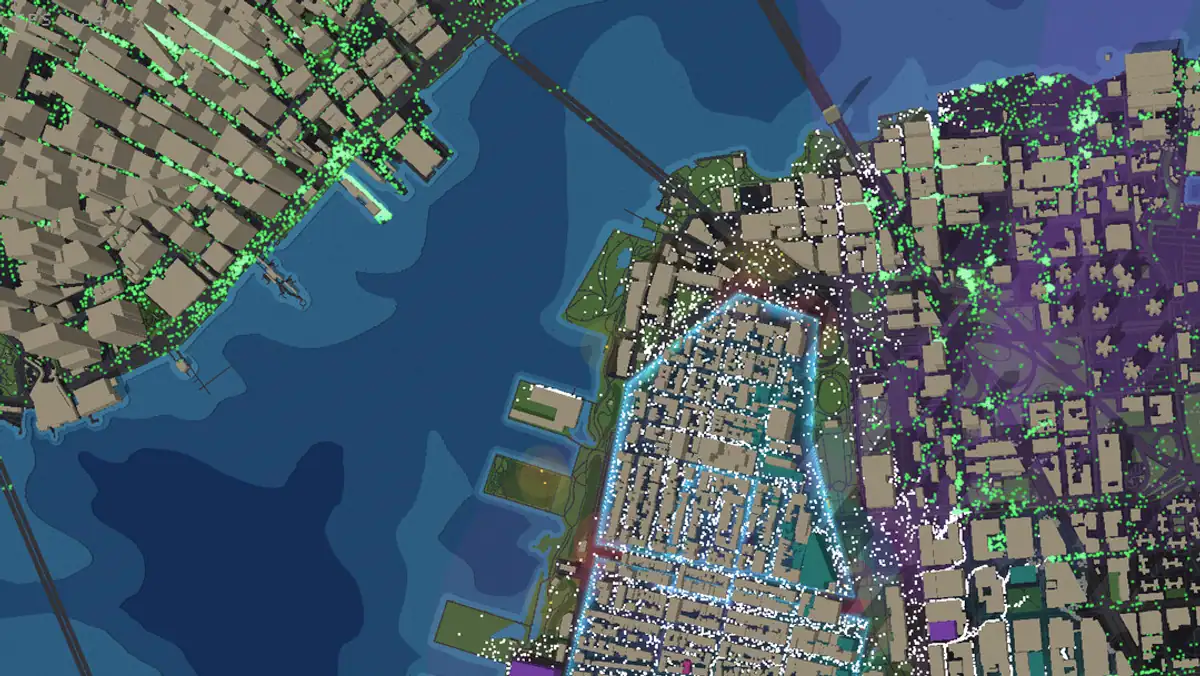
Mines and C4 do not distinguish between a zombie, a garrison and a civilian. If your corridor runs through a mined street, you built a trap for your own evacuation.
Official source: Steam store page ↗ · Steam Community hub ↗ · SteamDB ↗
FAQ
How much do spikes cost?
One dollar each on the launch build's deploy bar, which makes them the cheapest purchase in the game.
Do mines kill zombies instantly?
Mine fields destroy whatever walks over them and are consumed in the process. They are one-use per mine rather than a permanent barrier.
Is C4 worth $500?
Only when you need a structure removed, such as a building blocking a sightline. It is demolition, not a combat purchase.
Can traps kill civilians?
Yes. Mines and explosives are not faction-aware, which is why mined streets should never sit on a civilian corridor.
Do walls cost money?
Wall, fortify and gate are listed as build tools rather than priced deployables on the bar. The safe-zone cell is priced explicitly at $1.00 per cell, and the corridor at $0.40 per length.